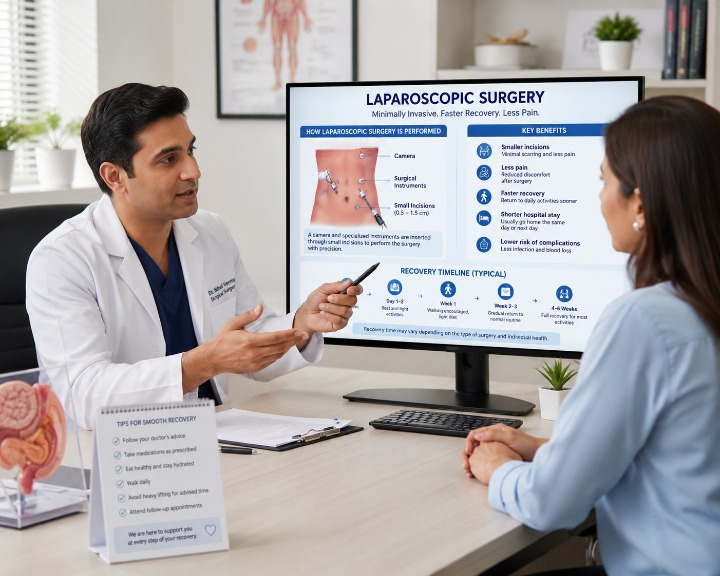
Laparoscopic surgery, commonly known as keyhole surgery or minimally invasive surgery, has revolutionized modern surgical care. Instead of making a large incision, surgeons perform the procedure through a few small cuts using a high-definition camera and specialized surgical instruments. This advanced technique allows many abdominal procedures to be completed with greater precision while reducing pain, blood loss, and recovery time.
If you are searching for the best laparoscopic surgeon in Pune or looking for the Best Laparoscopic Surgery Hospital in Pune, understanding how laparoscopic surgery works can help you make an informed treatment decision.
Laparoscopic surgery is a minimally invasive surgical technique used to diagnose and treat a wide range of medical conditions. During the procedure, the surgeon inserts a thin telescope called a laparoscope through a small incision. The laparoscope contains a high-definition camera that displays clear images of the internal organs on a monitor, allowing the surgeon to perform the operation with excellent accuracy.
Unlike traditional open surgery, laparoscopic surgery does not require a large surgical incision in most cases. Instead, only a few small openings are created for the camera and surgical instruments. This approach minimizes tissue damage and helps patients recover more comfortably.
For many abdominal conditions, laparoscopic surgery has become the preferred treatment option because it combines safety, precision, and faster healing.
The procedure is performed under general anesthesia. After making a few small incisions, the surgeon inserts the laparoscope and specialized instruments to perform the surgery while viewing magnified images on a monitor.
The laparoscope provides a clear, detailed view of the affected area, allowing the surgeon to operate with greater precision. Since the procedure is performed through small ports rather than a large incision, there is less trauma to muscles and surrounding tissues.
The entire surgery is performed by the surgeon. The camera and instruments simply provide better visualization and improved surgical access.
Laparoscopic surgery is widely used for treating several abdominal and gastrointestinal conditions.
Common procedures include:
An experienced best laparoscopic surgeon in Pune evaluates each patient carefully to determine whether minimally invasive surgery is the most appropriate option.
One of the biggest reasons patients prefer laparoscopic surgery is its quicker recovery and reduced postoperative discomfort.
Only a few small cuts are required, resulting in minimal tissue damage and smaller scars.
Because muscles and surrounding tissues are disturbed less than in open surgery, patients generally experience significantly less pain after the procedure.
The precision of laparoscopic surgery often results in minimal bleeding during surgery.
Most patients recover more quickly and are able to resume normal daily activities sooner than after traditional surgery.
Patients are encouraged to start walking within a short time after surgery. Early movement helps reduce complications and supports faster healing.
Many laparoscopic procedures require a shorter hospital stay, allowing patients to continue their recovery comfortably at home.
Smaller incisions leave less visible scars, which is an added benefit for many patients.
Although laparoscopic surgery offers several advantages, it may not be suitable for every patient.
Doctors usually consider:
Some patients may have medical conditions that make laparoscopic surgery unsuitable. In such situations, the surgeon will recommend the safest alternative based on individual clinical findings.
Consulting the best laparoscopic surgeon in Pune helps determine the most appropriate treatment approach.
Recovery following laparoscopic surgery is generally faster than recovery after traditional open surgery.
Most patients notice less discomfort because only small incisions are made. Walking usually begins within hours after surgery, depending on the procedure performed and the patient's condition.
Recovery typically includes:
Many patients return to office work within a few days to two weeks, while physically demanding activities may require additional recovery time as advised by the surgeon.
Like every surgical procedure, laparoscopic surgery also carries certain risks, although serious complications are uncommon.
Possible risks include:
These risks are minimized through proper patient selection, careful surgical planning, and experienced surgical expertise.
.png)
| Feature | Laparoscopic Surgery | Open Surgery |
|---|---|---|
| Incision Size | Small | Large |
| Pain | Usually Less | Usually More |
| Blood Loss | Lower | Higher |
| Hospital Stay | Shorter | Longer |
| Recovery Time | Faster | Slower |
| Scarring | Minimal | More Visible |
For many suitable patients, laparoscopic surgery provides excellent clinical outcomes while improving overall comfort during recovery.
Yes. Laparoscopic surgery is considered a safe and well-established surgical technique when performed by an experienced surgeon.
Its safety depends on several important factors:
Today, laparoscopic surgery is routinely performed worldwide for a wide variety of general and gastrointestinal surgical conditions with excellent success rates.
Dr. Sanjay Kolte is a highly skilled and experienced robotic and laparoscopic surgeon, recognized as a trusted General Surgeon in Aundh, Hernia Surgeon in Aundh, Trauma Surgeon in Aundh, and Bariatric Surgeon in Aundh.
With years of advanced surgical training and extensive clinical experience, he specializes in general surgery, hernia repair, trauma care, robotic surgery, laparoscopic surgery, and bariatric procedures. His patient-centered approach focuses on accurate diagnosis, minimally invasive treatment whenever appropriate, patient safety, and faster recovery.
Patients looking for the best laparoscopic surgeon in Pune can benefit from his expertise, compassionate care, and commitment to delivering safe and personalized surgical treatment.
Laparoscopic surgery is a minimally invasive surgical technique performed through small incisions using a camera and specialized surgical instruments.
Most patients experience less pain compared to traditional open surgery because the incisions are much smaller.
The duration depends on the type of surgery and the patient's condition. Your surgeon will explain the expected operating time before the procedure.
Benefits include smaller incisions, less pain, reduced blood loss, faster recovery, shorter hospital stay, and minimal scarring.
Recovery varies depending on the procedure, but many patients return to normal daily activities much sooner than after open surgery.
No. Suitability depends on your medical history, overall health, and the condition being treated.
Yes. It is considered a safe and effective procedure when performed by an experienced laparoscopic surgeon.
No. Most laparoscopic procedures involve only a few small incisions that usually leave minimal scarring.
Hernias, gallbladder disease, appendicitis, gastrointestinal disorders, bariatric conditions, and several abdominal surgeries can often be treated laparoscopically.
An experienced surgeon can determine the most appropriate treatment, perform the procedure safely, and help achieve the best possible recovery and outcomes.
Laparoscopic surgery has become one of the most significant advancements in modern surgical care. By using small incisions and specialized instruments, it offers patients less pain, quicker recovery, shorter hospital stays, and excellent cosmetic results while maintaining high standards of safety.
Although not every patient is a suitable candidate, many abdominal conditions can be effectively treated through minimally invasive techniques. If you are searching for the best laparoscopic surgeon in Pune, consulting an experienced specialist can help you understand whether this advanced surgical approach is right for your condition, along with its benefits, expected recovery, and long-term outcomes.
If you are looking for the Best Laparoscopic Surgery Hospital in Pune, choosing a healthcare facility with experienced surgeons, advanced technology, and a patient-centered approach can contribute to safe treatment, personalized care, and successful long-term outcomes.